
Brake repairs · Clayton
Brake Repairs & Brake Pad Replacement in Clayton
Brakes are the one system you never want to guess about. We inspect, measure, explain what we find, and quote before we fit a thing.
5.0 from 75 Google reviews
What are your brakes telling you?
Most people arrive after they hear or feel something. These are the usual signs.
High-pitched squeal
Often the wear indicator on the pads telling you they are close to the end of their life.
Grinding or scraping
Pads worn through to the backing plate. Stop driving it far and get it checked quickly.
Steering wheel or pedal vibration
Commonly rotors that have warped or worn unevenly, felt most when braking from speed.
Soft or sinking pedal
Can point to air or moisture in the fluid, or a hydraulic fault. Do not wait on this one.
Car pulls to one side
A sticking caliper or uneven wear on one side.
Brake warning light
Low fluid, worn pads (on cars with sensors) or a fault. Your dash light is worth reading properly: see diagnostics.
Do I need new pads or new rotors too?
| Brake pads | Brake rotors (discs) | |
|---|---|---|
| What they do | Press against the rotor to slow the car | The disc the pads grip |
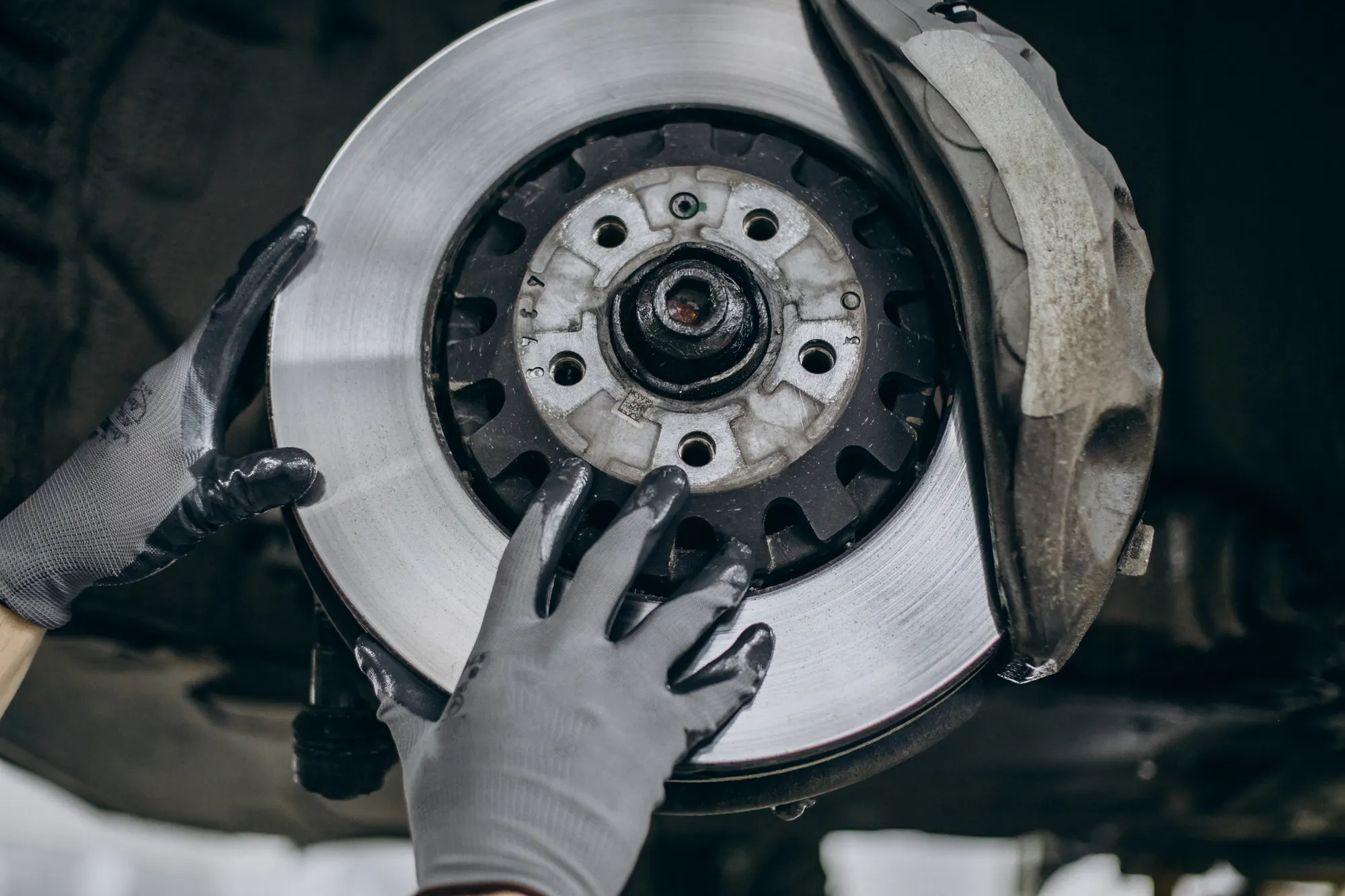
| Wear | Wear out as friction material is used up | Wear thinner, can score, and can warp from heat |
| How we decide | Measure remaining pad thickness and check wear sensors | Measure thickness against the manufacturer’s minimum and check the surface |
| Usual outcome | Replaced when worn | Replaced when under minimum, scored or warped; sometimes with the pads |
What happens when you bring your car in
Inspect
Wheels off, pads, rotors, calipers, lines and fluid checked.
Measure
Pad and rotor thickness measured against the manufacturer’s limits.
Quote
You get a plain-English explanation and the price before work starts.
Fit and test
Parts fitted to specification, then the brakes are tested before the car leaves.
Why European brakes need a specialist
European cars brake differently. Many have pad wear sensors that need resetting, electronic parking brakes that must be put into service mode with the right equipment before the rear pads can be changed, and large rotors matched to specific pad compounds. Doing it correctly matters, and it is why these jobs belong with people who do them every week.
Brake wear is also checked on every logbook service, so many owners find out about worn pads there first. If a brake warning light is on, start with check engine light and dash light diagnostics.
Frequently asked questions
Can I replace brake pads without replacing the rotors?
Sometimes, if the rotors are still above minimum thickness and have a smooth, even surface. We measure them first and tell you honestly whether new pads alone will do the job properly.
How long do brake rotors last?
There is no fixed number. Rotor life depends on the car, your driving and the pads fitted, and many European cars wear rotors faster than pads. We measure against the manufacturer’s minimum thickness rather than guessing.
Is it safe to drive with squealing brakes?
A light squeal can be pad wear or dust, but grinding means metal on metal and should be looked at straight away. If in doubt, have the brakes inspected before further driving.
How much does brake pad replacement cost?
It depends on the car, whether rotors need replacing and the parts used. We inspect, measure and quote before any work starts.
Book a brake inspection
Tell us what you are hearing or feeling, plus your make and model.
Prefer to talk?
03 9885 8067- 3/27 Winterton Road, Clayton VIC 3168
- Mon–Fri 8:00am–5:30pm · Sat by appointment
- We quote before any work starts.
Loading form…
Or call 03 9885 8067